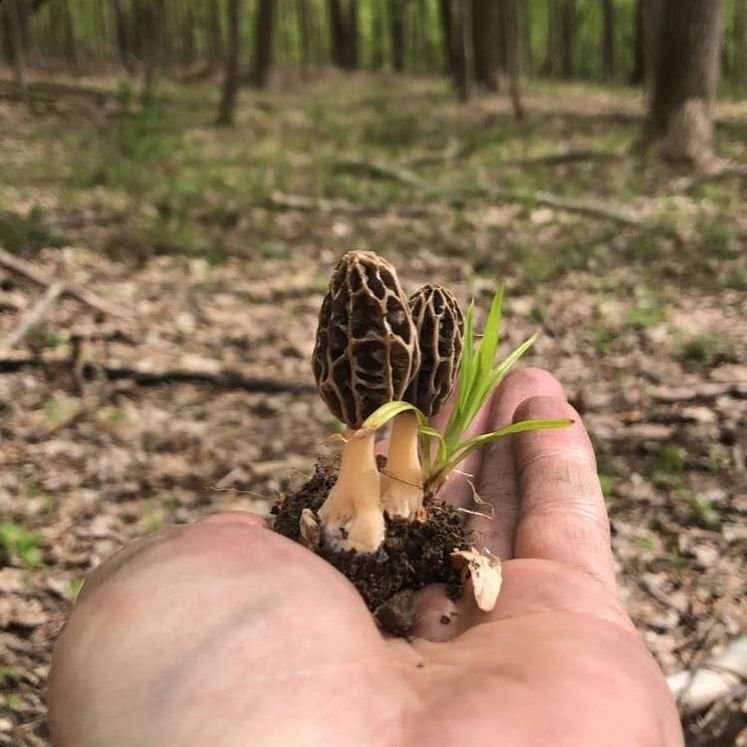
We got our foraging licenses in 2020, during a time when a lot of things felt uncertain and the woods were one of the few places that still made sense. What started as a way to get out of the house became a skill we practice almost every day, and it fundamentally changed how we think about food, seasons, and the land we live on.
Foraging isn’t about survival skills or living off the grid. For us, it’s about paying attention. The Hudson Valley is incredibly rich with wild edibles — and most people walk right past them without a second look.
What Foraging Actually Looks Like
There’s a romantic image of foraging — wicker basket, dappled sunlight, gently plucking herbs from a meadow. The reality is muddier (literally). You’re crouching in damp leaves, squinting at bark, flipping logs, and spending a lot of time identifying things you ultimately leave behind.
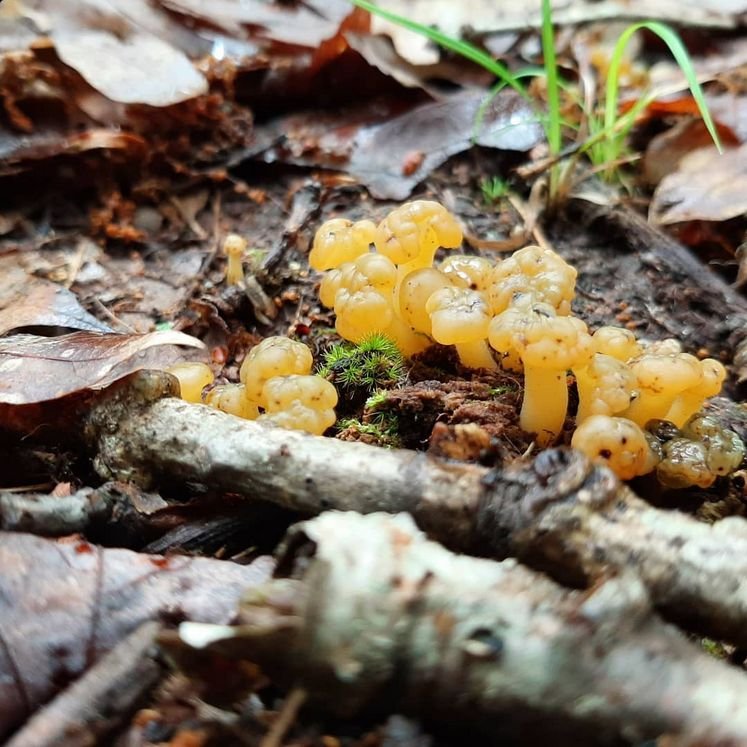 Gourmet mushrooms in the wild — they show up where the woods are old and damp.
Most foraging trips, we come home with less than you’d think. And that’s fine. The point isn’t to fill a basket every time — it’s to build a relationship with your local ecosystem. Over time, you start to learn where things grow, when they fruit, and what conditions they prefer. That knowledge compounds year after year.
Wild Mushrooms: The Heart of What We Do
Mushrooms are our specialty, and the Hudson Valley delivers. The mix of hardwood forests, moisture, and seasonal temperature swings creates ideal conditions for a surprising variety of edible species.
Some of what we find regularly:
Chicken of the Woods — Bright orange and yellow shelf fungus that grows on oaks and other hardwoods. When it’s young and tender, it has a remarkably chicken-like texture. We slice it thick, bread it, and fry it. Genuinely one of the best things we eat all year.
Hen of the Woods (Maitake) — Found at the base of oak trees in fall. These can get enormous — we’ve found specimens over 15 pounds. Rich, earthy flavor that’s incredible roasted or in risotto. Maitake is also highly prized in Japanese cuisine and for good reason.
Chanterelles — Golden, trumpet-shaped, and smelling faintly of apricots. They show up in summer after good rains and hide in the leaf litter under oaks and conifers. Simple sauté with butter and shallots is the only correct preparation.
Black Trumpet — These look like tiny dark flowers growing from the forest floor. Easy to miss, impossible to forget once you taste them. Intense, almost truffle-like flavor. We dry them and use them as a seasoning all winter.
Oyster Mushrooms — Yes, we grow these commercially, but finding them wild is a different experience entirely. Wild oysters growing on a fallen log in cool weather have a depth of flavor that cultivated ones can’t quite match.
Beyond Mushrooms
While mushrooms are our main focus, the Hudson Valley offers plenty of other wild edibles worth knowing:
Ramps (Wild Leeks) — The unofficial mascot of spring foraging in the Northeast. Pungent, garlicky greens and bulbs that show up in April. We pickle the bulbs and use the greens in pesto. Important note: ramps are easily over-harvested. We never take more than a small percentage from any patch, and we only harvest leaves from some plants rather than pulling the whole bulb.
Elderflower and Elderberry — Elderflower appears in early summer and makes a beautiful cordial. Elderberries come later and are excellent in syrups and preserves. Both grow abundantly along roadsides and field edges throughout the valley.
Wood Sorrel — Those little clover-like plants with heart-shaped leaves? They’re everywhere, and they have a bright, lemony flavor that’s fantastic in salads or as a garnish. Kids love them.
Wild Garlic Mustard — An invasive species, which means you can harvest as aggressively as you want with zero guilt. The leaves make a peppery pesto, and you’re actually helping the local ecosystem by removing it.
The Rules We Live By
Foraging comes with real responsibility. Here’s what guides us every time we go out:
Never eat anything you can’t identify with 100% certainty. Not 95%. Not “pretty sure.” One hundred percent. If there’s any doubt, leave it. Take photos, bring them home, cross-reference with multiple sources. There is no shortcut here, and the consequences of getting it wrong with certain species are severe.
Get licensed. In New York, you need a foraging license to sell anything you harvest from the wild. Even for personal use, understanding the regulations in your area is important. We went through the licensing process and it made us better, more knowledgeable foragers.
Take only what you need. This isn’t a harvest — it’s a relationship. We never clear out a patch of anything. Leave enough for the ecosystem to regenerate, for wildlife to eat, and for other foragers to enjoy.
Know your land. Don’t forage from roadsides that might be sprayed with herbicides. Don’t forage from private property without permission. Avoid areas near industrial sites or old dumps. The stuff growing there might look fine, but you don’t know what’s in the soil.
Learn from experienced people. Books and apps are helpful, but nothing replaces walking through the woods with someone who knows what they’re looking at. If you can find a local foraging walk or workshop, do it. We learned more in our first guided walk than in months of reading.
Getting Started
If you’re in the Hudson Valley and you want to start foraging, here’s our honest advice:
Start with easy wins. Learn to identify three or four species that are abundant, easy to recognize, and have no dangerous look-alikes. Chicken of the woods is a great first mushroom — it’s bright orange, grows on trees, and doesn’t look like anything toxic.
Get a good field guide. For our region, we recommend guides specific to the Northeast rather than generic national ones. The more regional the guide, the more useful it is.
Go slow. Foraging isn’t a race. Spend time just observing before you start picking. Learn to see the forest as a living system with patterns and rhythms. The more you notice, the more you find.
Bring us what you find. Seriously — we offer mushroom identification services. If you find something in your yard or on a hike and you’re not sure what it is, bring it to us at a farmers market or reach out through our site. We’re happy to help.
Foraging gave us a reason to slow down and pay attention to the place we live. Three years in, we’re still learning — and that’s the best part. The woods always have something new to show you if you’re willing to look.